Cushing's disease is a condition caused by chronic exposure to elevated levels of the hormone cortisol (hypercortisolism). When a pituitary tumor is the cause of high cortisol, the disorder is called Cushing's disease.
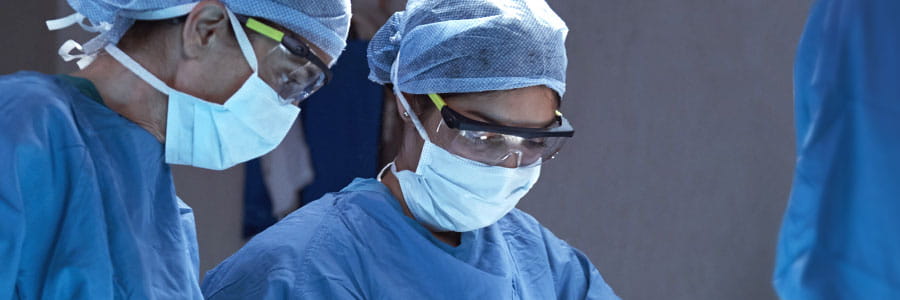
The preferred surgical treatment at UPMC for Cushing's Disease is the Endoscopic Endonasal Approach (EEA) to remove the pituitary tumor. This innovative, minimally invasive technique uses the nose and nasal cavities as natural corridors to access hard-to-reach or previously inoperable tumors. EEA offers the benefits of no incisions to heal, no disfigurement to the patient, and a faster recovery time.
Diagnosing Cushing's disease requires laboratory studies demonstrating high levels of blood cortisol. If tests show that cortisol levels are above normal, the reason for this must be identified so that the doctor can determine the best treatment plan.
Your physician will also ask you about your symptoms. These may include:
- weight gain of the upper body and trunk
- moon-shaped face
- skin changes, such as darkening, purple stretch marks, acne, or easy bruising
- in women: excess hair growth and menstrual disorders
- decreased fertility and libido
- high blood pressure
- water retention or swelling
- high blood sugar or diabetes
- tiredness, fatigue
- personality changes, mood swings
- muscle weakness
- osteoporosis
For most cases of Cushings disease, the best treatment is to remove the pituitary tumor that is causing the excessive levels of cortisol. At UPMC, the preferred method for this surgery is the Endoscopic Endonasal Approach (EEA) . This approach allows surgeons to see the pituitary gland well without making an open incision. The pituitary tumor is removed through the nose. The remaining pituitary gland is preserved and explored carefully to check for other lesions, and all abnormal tissue is removed.