UPMC: Minimally Invasive Brain Surgery

Ranked among America's Best Hospitals by U.S. News & World Report

Conditions and Treatments

Send to a Friend
Share This Page
Printer-Friendly Page

Craniopharyngioma

Overview

Craniopharyngiomas of the skull base are benign tumors that grow in the area of the pituitary gland. These tumors are most common in children. Almost half of all craniopharyngiomas develop in people under the age of 20.

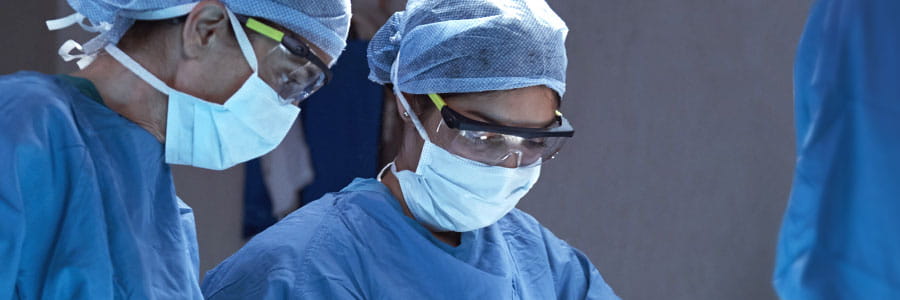
The preferred surgical treatment at UPMC for craniopharyngioma is the Endoscopic Endonasal Approach (EEA) to remove the tumor. This innovative, minimally invasive technique uses the nose and nasal cavities as natural corridors to access hard-to-reach or previously inoperable tumors. EEA offers the benefits of no incisions to heal, no disfigurement to the patient, and a faster recovery time. If complementary treatments, such as radiation therapy, are needed, those therapies can begin soon after surgery.

Diagnosis

The physician may perform a physical exam and ask about symptoms. Symptoms may include:

  • headache
  • nausea and vomiting
  • balance problems

Other conditions may result from damage to the pituitary gland, including:

  • hypothyroidism (weight gain, fatigue, cold intolerance, and constipation)
  • adrenal failure (dizziness, hypoglycemia, cardiac arrhythmias, lethargy, confusion, anorexia, nausea, and vomiting)
  • diabetes insipidus (excessive thirst and urination)
  • decreased sexual drive, including impotence in men and amenorrhea in women
  • delayed puberty and stunted growth in pediatric patients
  • overeating, obesity, and sleepiness

The doctor may also recommend a neurological exam to evaluate vision, hearing, balance, coordination, and reflexes.

MRI or CT scans may be ordered to show the size and extent of the tumor. Depending on other symptoms, such as hormone and visual problems, you may be seen by an endocrinologist and an ophthalmologist.

Treatments

Surgery

Surgery is the primary treatment for craniopharyngiomas.

Craniopharyngiomas may be approached directly by using the Endoscopic Endonasal Approach (EEA). This approach gives a direct angle at the base of these tumors, providing extraordinary visualization via the endoscope, to allow for optimal tumor removal. The tumor is removed through the nose and nasal cavities, with no incisions to the face or skull, and recovery time is faster than with a traditional approach.

Although the goal of the surgery is total tumor removal with pituitary function preservation, in some cases the tumor's proximity to critical brain structures (the hypothalamus, optic chiasm, and blood vessels) makes complete removal impossible. The Expanded Endonasal Approach gives the surgeons the best view of the undersurface of the optic nerves, chiasm, and pituitary stalk, assisting them in deciding whether to leave residual tumor attached to these important structures. In cases where the tumor has clearly invaded the pituitary gland, the pituitary gland may be removed.

Radiation Therapy

In instances where it is not safe to remove the tumor completely, surgery is followed by radiation therapy to eradicate the remaining tumor cells. This treatment option has success rates on par with those of complete tumor removal.

Contact Us

How can we help you?

Phone Numbers:

1-877-986-9862 (within the U.S.)
For international calls: 01-877-320-8762

Haley Spitznagel

Patient Stories:

Meet Haley Spitznagel

Doctors first thought Haley Spitznagel was suffering from migraine headaches, but it turned out to be something more serious.

Read Haley's Story »

Watch Haley's Story »

Patient Stories:

Meet Elizabeth

After two previous brain surgeries, this woman found UPMC and EEA—and long-awaited relief from an aggressive tumor.

Read Elizabeth's Story »

Patient Stories:

Meet Sharon

Faced with the loss of her vision, this librarian found new hope with the EEA surgeons at UPMC, who gave her back the gift of sight.

Read Sharon's Story »

Find More Information for Pediatric             Patients