Chondrosarcoma is a malignant tumor (cancer) that is typically found in the cartilage cells of the femur, arm, pelvis, knee, and spine. Rarely, the ribs and other areas also may be affected. Chondrosarcoma also can originate at the skull base from the cartilage between the clivus and the petrous bone. This is called petro-clival synchondrosis. As with all cancers, the prognosis or outcome depends upon how large the tumor is and whether it has spread to distant structures.
Chondrosarcoma most often occurs in people between 50 and 70 years old, and rarely affects people younger than 20. Males and females are at equal risk of developing chondrosarcoma. Symptoms can include a large lump or mass on a bone, pressure surrounding the mass, or severe pain. Symptoms of chondrosarcoma of the skull base are neurological, and may include headaches, as well as vision and hearing disturbances.
The preferred surgical treatment at UPMC for chondrosarcoma of the skull base is the Endoscopic Endonasal Approach (EEA) to remove the tumor. This innovative, minimally invasive technique uses the nose and nasal cavities as natural corridors to access hard-to-reach or previously inoperable tumors. EEA offers the benefits of no incisions to heal, no disfigurement to the patient, and a faster recovery time. If complementary treatments, such as radiation therapy or chemotherapy, are needed, those therapies can begin soon after surgery.
Your doctor will ask about your symptoms and medical history, and perform a physical exam. Symptoms of chondrosarcoma of the skull base may include:
- headache
- double vision
- ringing in the ears (tinnitus)
Diagnostic tests may include MRI or CT scans, x-rays, and a biopsy to diagnose a malignancy.
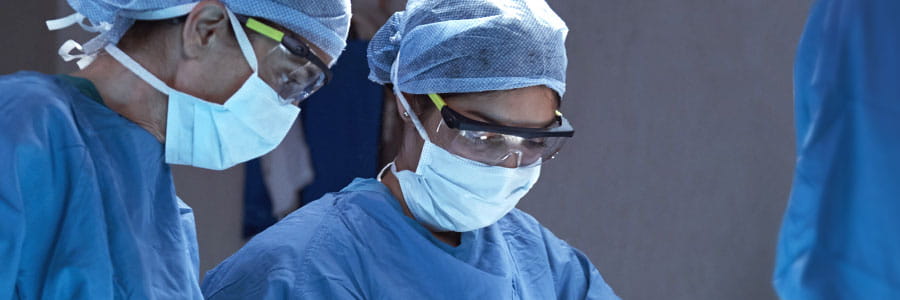
Surgery is the main treatment used to remove and treat chondrosarcomas of the skull base, or petro-clival synchondrosis. At UPMC, the preferred method for this surgery is the Endoscopic Endonasal Approach (EEA). This state-of-the-art, minimally invasive approach allows surgeons to reach the tumor directly through the natural corridor of the nose without making an open incision. The tumor is then removed through the nose and nasal cavities, and recovery time is faster than with a traditional approach.
Treatments also may include chemotherapy or radiation therapy. Patients who received surgery with the Endoscopic Endonasal Approach (EEA) may be able to begin radiation therapy or chemotherapy soon after surgery.