Basilar invagination is an uncommon condition that occurs when the upper portion of the second vertebra (C2) moves upward. This may cause compression of the spinal cord and brainstem, creating a variety of neurological problems, including sudden death. This condition may be present at birth; may occur as the result of an accident; or may occur in patients with bone diseases such as rheumatoid arthritis.
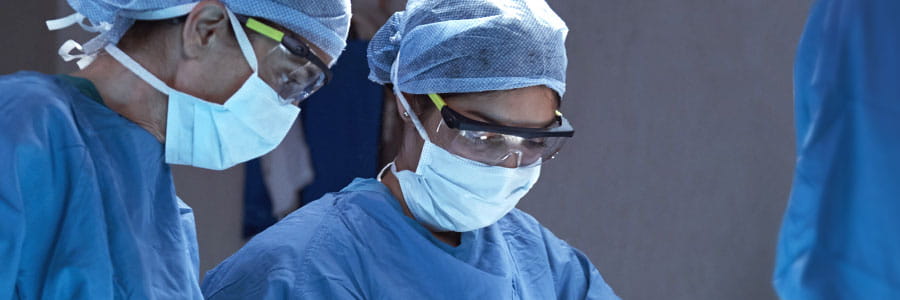
If surgery is needed, UPMC surgeons will utilize the Endoscopic Endonasal Approach (EEA) to treat this condition. This innovative, minimally invasive technique uses the nose and nasal cavities as natural corridors to access hard-to-reach or previously inoperable areas. EEA offers the benefits of no incisions to heal, no disfigurement to the patient, and a faster recovery time.
Basilar invagination can be diagnosed by imaging studies such as head X-rays, CT and MRI scans.
Your physician will also ask you about your symptoms. These may include:
- Headache
- Dizziness
- Confusion
- Swallowing problems
- Numbness/tingling in the extremities
- Paralysis
Symptoms can become worse with flexion of the head, which even further drapes the brainstem and/or spinal cord over the upper portion of the second vertebra.
Non-surgical treatment for basilar invagination that is not compressing the spinal cord may include physical therapy, non-steroidal anti-inflammatory medication, or a cervical collar.
If surgery is needed, UPMC physicians will use the Endoscopic Endonasal Approach (EEA) to decompress the brainstem and spinal cord. This state-of-the-art, minimally invasive surgical procedure uses the nose as a natural corridor to reach these lesions, without any incisions in the face or head.
Most patients will subsequently need posterior cranio-cervical fusion to prevent recurrence and to stabilize the joints.